The workspace where support agents live all day.
The designer with hands on the product, every screen of the way.
Contacto’s market strategy, a B2C contact centre unifying voice, chat and messaging on top of existing helpdesks, was set by our design lead and PM. My job was to make it real: the flows, the screens, and the prototypes engineering shipped.
I owned interaction design across the agent workspace, supervisor tools and admin configuration, sat in on discovery research, and held the line on craft and consistency as the product grew.
An ambiguous 0→1 brief and three very different users.
Plivo had voice and messaging APIs but no packaged product for the people who handle customer conversations. The hard part was designing for three people at once: the agent handling many conversations, the team leader watching the floor in real time, and the admin setting it all up. Three interfaces that had to feel like one product.
Four operational truths I had to design around.
Interviews with support leaders across e-commerce, food delivery, health-tech and ride-hailing turned into hard constraints on how every screen behaves.
Three surfaces, three jobs, decided screen by screen.
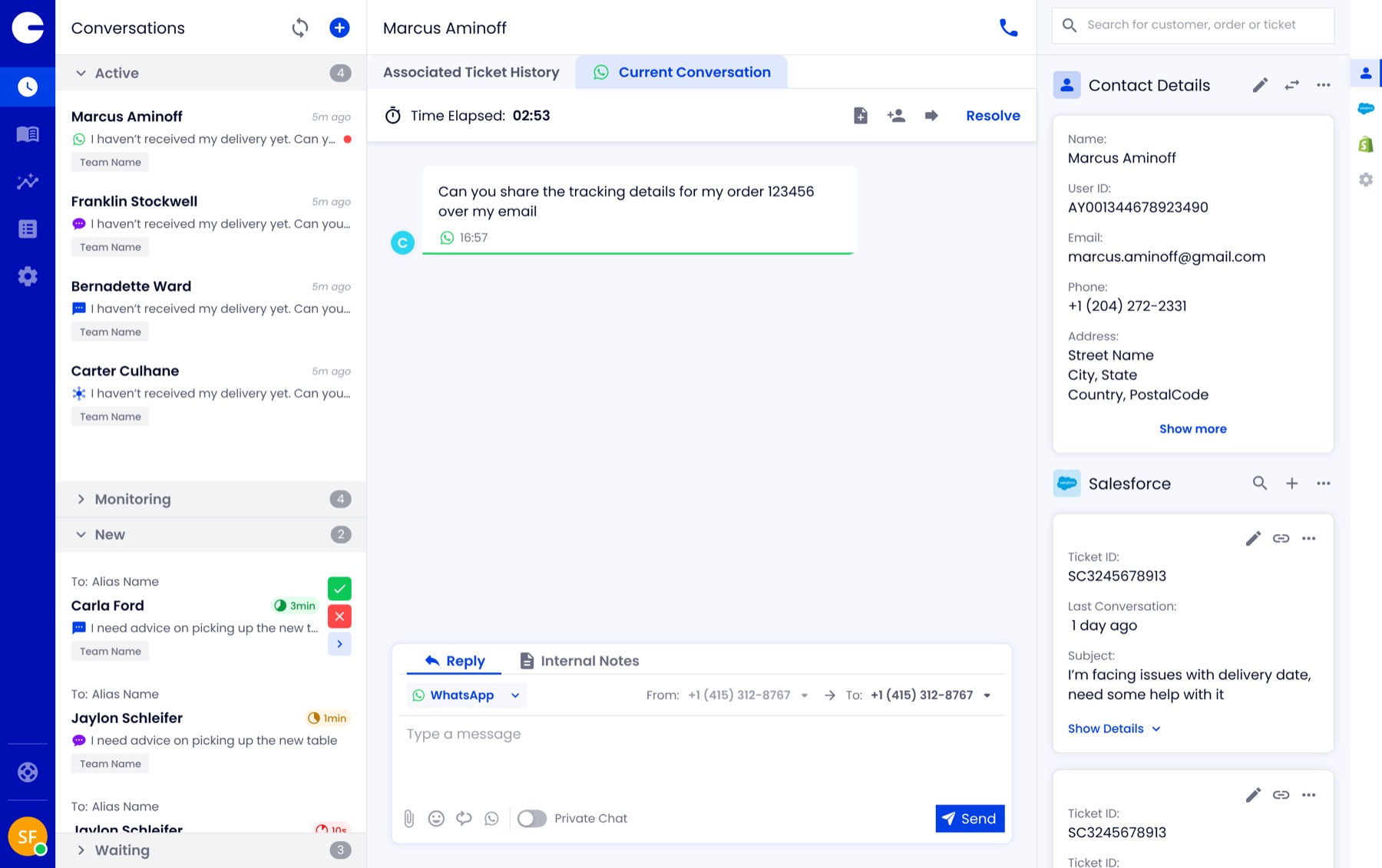
Agent workspace: one timeline for a dozen conversations
A single chronological timeline merges voice, chat and SMS, with a list rail that stays calm under load. Transfer, hold and escalate happen inside the thread, and handoffs carry full context so customers never repeat themselves.
Supervisor tools: built for the person watching seven agents
Live state comes before historical reporting. The trickiest piece was barge-in, joining a call to coach while staying invisible to the customer, which meant making presence and privacy unmistakable. Quality scoring moved into the review flow and retired the spreadsheets.
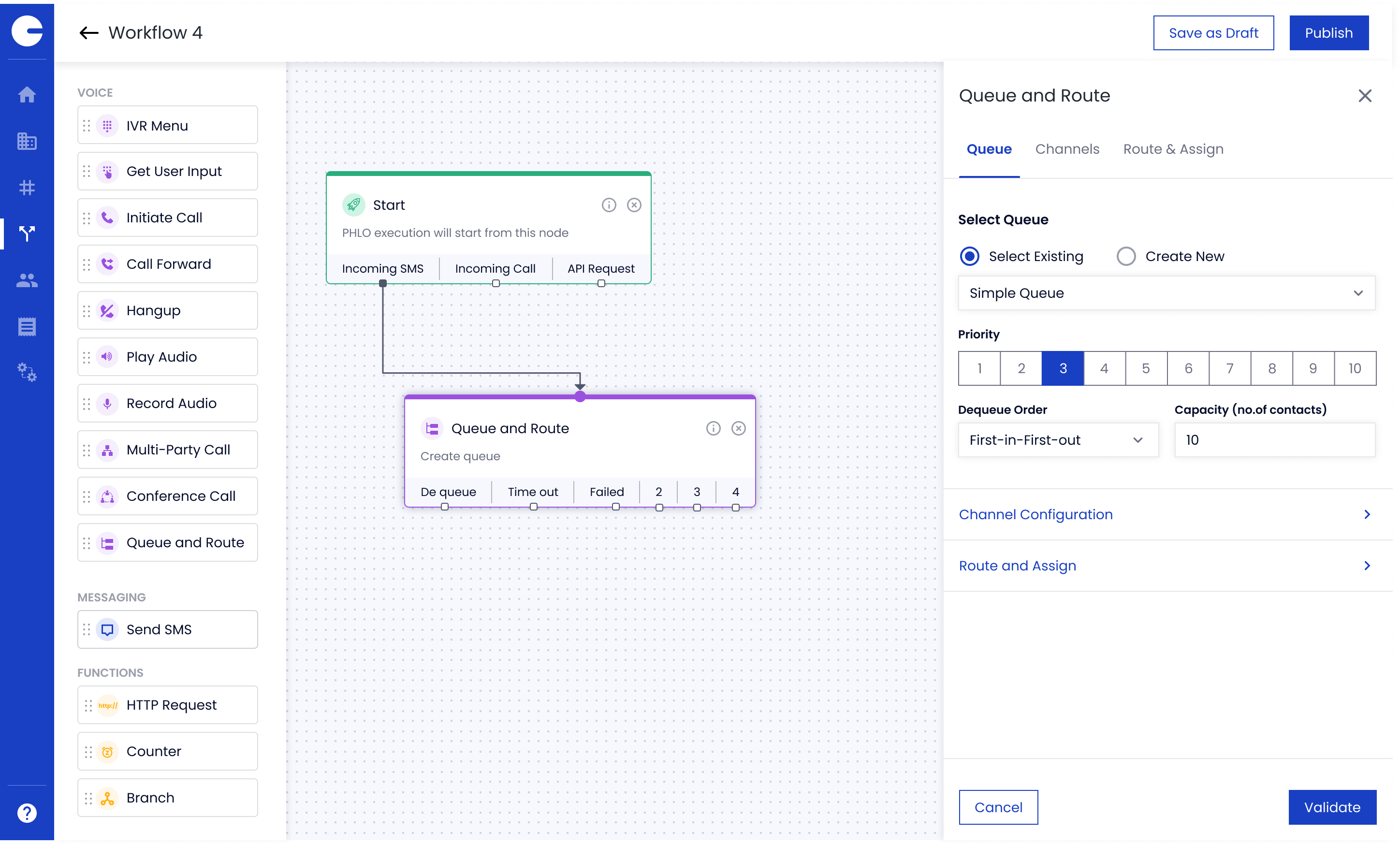
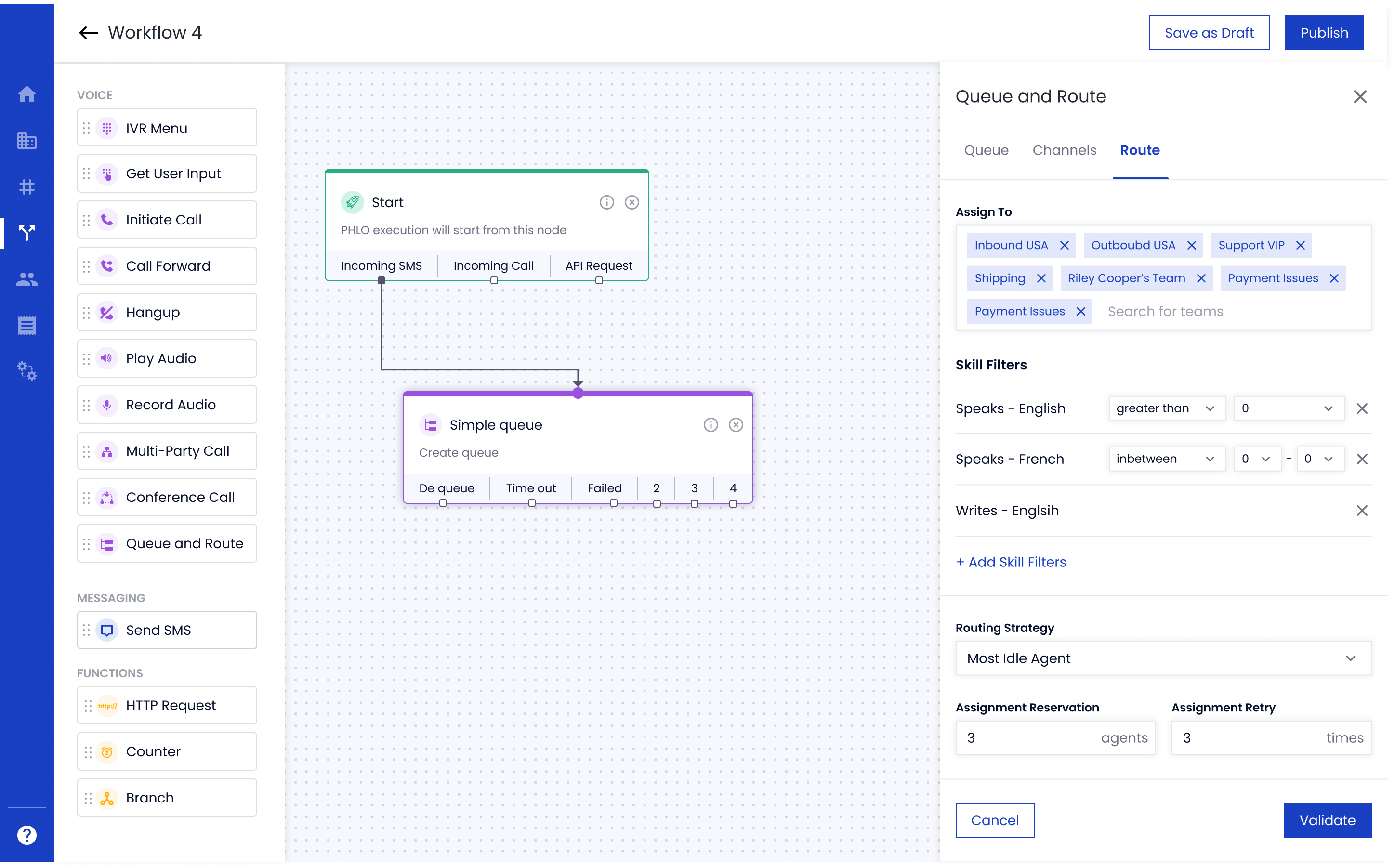
Admin configuration: optimised for the first run
A visual rule builder let an admin finish a full setup without ever opening the Plivo API console.
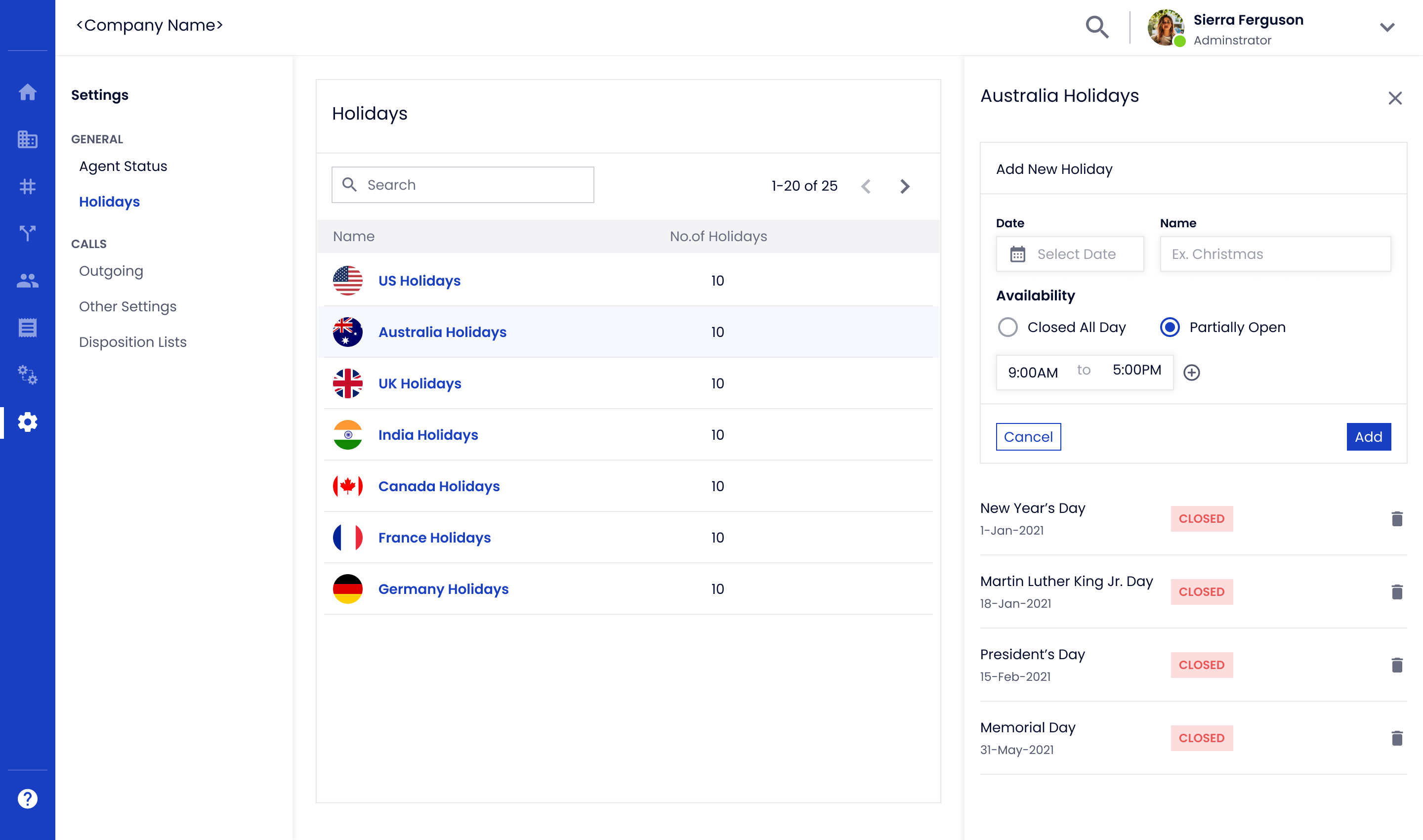
Three users, one product that still felt like one product.
As the surface grew, the daily work was consistency: shared patterns for status, presence, lists and configuration, so the three tools read as one system. I prototyped what couldn’t be judged statically (live queues, barge-in state, real-time availability) and kept the build honest to the design as scope expanded.
Enterprise-ready in two quarters.
All three surfaces shipped. The foundations held up well enough that Contacto later became the core of Plivo’s unified Voice AI platform.
“Unify voice and chat” was the strategy. Making sure an agent could still find their place after ten conversations at once was the design work.